

Days:00
Hours:00
Minutes:00
Seconds

info@icoi.com.cn

Conference Chairs
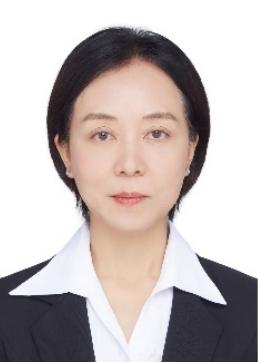
Qionghua Wang
Professor and Doctoral Supervisor, School of Instrumentation and Optoelectronic Engineering, Beihang University; Recipient of the National Science Fund for Distinguished Young Scholars; Fellow of SID, OPTICA, SPIE, the Chinese Optical Society (COS), and the Chinese Society of Optical Engineering (CSOE)
Biography: Qiong-Hua Wang is a professor of optics at the School of Instrumentation and Optoelectronic Engineering, Beihang University. She published more than 350 papers cited by SCI and authored 3 books. She holds 7 U. S. patents and more than 160 Chinese patents. She is a Fellow of SID, OPTICA, COS and CSOE. She is/was associate/subject editors of PhotoniX, Journal of the Society for Information Display, Optics Express, etc. She is a recipient of National Science Fund for Distinguished Young Scholars, a leading talent in scientific and technological innovation and a Changjiang Scholar Distinguished Professor of the Ministry of Education. Her research interests include 3D display technology, liquid crystal technology, liquid photonic device and imaging technology.
Yufei Ma
Professor and Doctoral Supervisor, School of Astronautics, Harbin Institute of Technology; Fellow of Optica (formerly OSA); Recipient of the National Science Fund for Excellent Young Scholars
Biography: Prof. Yufei Ma is a tenured full professor and PhD supervisor at the School of Astronautics, Harbin Institute of Technology (HIT). He is an Optica Fellow, recipient of the National Outstanding Youth Science Fund and the first batch of Outstanding Youth Science Fund of Heilongjiang Province, and a leader of HIT Young Scientist Studio. He was an Elsevier Highly Cited Chinese Researcher (2021-2023) and listed among the World’s Top 2% Scientists (2023-2024). He received his PhD in Physical Electronics from HIT in 2013 and was a visiting scholar at Rice University, USA (2010-2011). His research focuses on laser sensing, laser spectroscopy and solid-state laser technologies. He has published over 100 papers as first/corresponding author and led multiple projects including those from the National Natural Science Foundation of China. He serves as Field Editor of Photoacoustics, Associate Editor of Optics Express and editorial board member of 9 SCI journals, and holds concurrent posts such as Vice Director of relevant committee of Chinese Optical Engineering Society. He has won many provincial and ministerial awards, and his research was selected as one of the Top 10 Influential Events in Chinese Optics 2024.
Conference Co-Chair
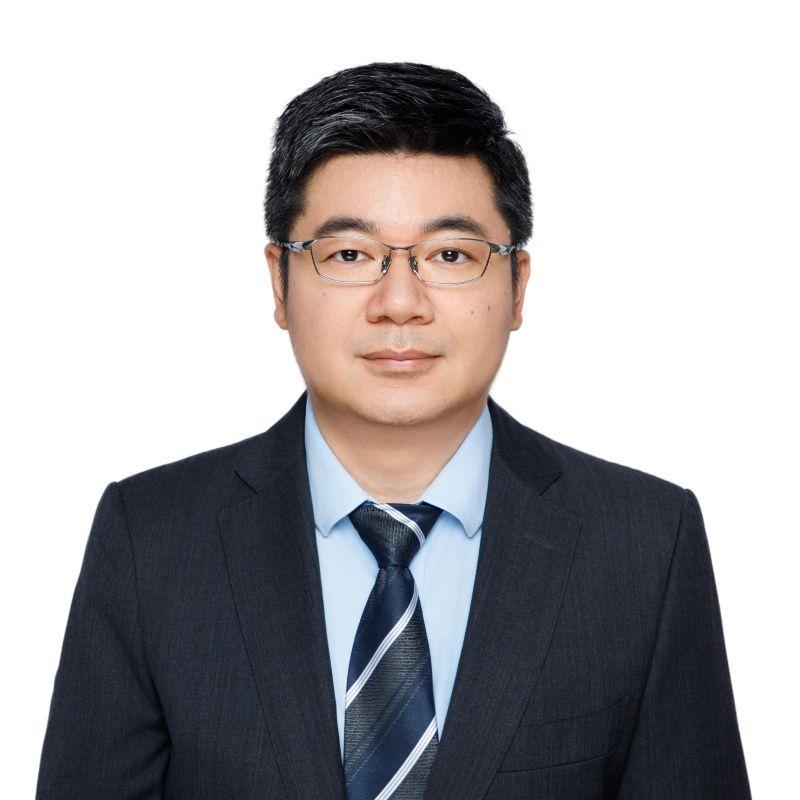
Changjun Min
Distinguished Professor and Doctoral Supervisor, Shenzhen University; Recipient of the National Science Fund for Excellent Young Scholars; Ministry of Education New Century Excellent Talents Awardee
Biography: Dr. Changjun Min is a Distinguished Professor and doctoral supervisor at Shenzhen University. He is a recipient of the National Science Fund for Excellent Young Scholars and was selected for the Program for New Century Excellent Talents of the Ministry of Education. His research focuses on nanophotonics, surface plasmons, optical vortices, optical tweezers, ultrafast microscopic imaging, and metasurface devices, where he has achieved a number of innovative results. He has published more than 170 SCI-indexed papers with over 6,000 citations, in journals including Nature Communications, Light: Science & Applications, and Advanced Materials. Since 2019, he has been consecutively ranked among the top 2% of scientists worldwide in the Stanford University career-long impact list. He has led over 20 research projects, including the National Key Research and Development Program of the Ministry of Science and Technology and key projects under the Major Research Plan of the National Natural Science Foundation of China. He received the Jin Guofan Young Scholar Award of the China Instrument and Control Society in 2012, the China Optics Important Achievement Award in 2013, and the Second Prize of the Natural Science Award of the Ministry of Education in 2018. He serves as a council member of the Chinese Optical Society and a council member of the Shenzhen Quantum Information Society.
Committee
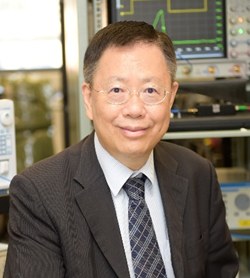
Din-Ping TSAI
Chair Professor, Department of Electrical Engineering and Department of Physics, City University of Hong Kong; Fellow of COS, AAAS, IEEE, SPIE, OPTICA, and APS; Member of the Hong Kong Academy of Engineering Sciences (HKAES); Fellow of the National Academy of Inventors (NAI); Fellow of the International Academy of Engineering (IAE); Fellow of the Asia Pacific Academy of Materials (APAM)
Biography: Professor Din-Ping TSAI is currently Chair Professor of the Department of Electrical Engineering, and Department of Physics, City University of Hong Kong. He is an elected Fellow of AAAS, APS, COS, EMA, IEEE, JSAP, OSA, SPIE, PSHK, PST, and AAIA, respectively. He is also an elected Member of the International Academy of Engineering (IAE), and Academician of the Asia-Pacific Academy of Materials (APAM), Hong Kong Academy of Engineering (HKAE), National Academy of Inventors (NAI), USA; respectively. He is the author and co-author of 451 SCI papers, 4 books, 70 book chapters and conference papers, and 39 technical reports and articles. He was granted 78 patents for 55 innovations. He was invited as an invited speaker for international conferences or symposiums more than 365 times (33 Plenary Talks, 70 Keynote Talks). He received more than 40 prestigious recognitions and awards, including “Mozi Award” from the International Society of Optical Engineering (SPIE) in 2018; “Global Highly Cited Researchers,” by Web of Science Group (Clarivate Analytics) in 2020 and 2019, respectively; China’s Top 10 Optical Breakthroughs in 2020 and 2018, respectively; 2024 Frontiers of Science Award; China’s Top 10 Metamaterial Breakthroughs Award,” in 2024 and 2025; etc. He currently serves as a member of the editorial board of 12 prestigious Journals, Associate Editor of “Science Advances,” Editor of “Light: Advanced Manufacturing” and "Photonics Insights," respectively.
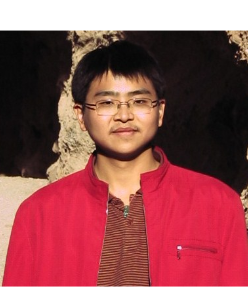
Dong Sun
Boyuan Distinguished Professor, International Center for Quantum Materials (ICQM), School of Physics, Peking University; Recipient of the National Science Fund for Distinguished Young Scholars.
Biography: Dong Sun is a Boyuan Distinguished Professor at the International Center for Quantum Materials (ICQM), School of Physics, Peking University, and a recipient of the National Science Fund for Distinguished Young Scholars. He received his B.S. in Physics from the University of Science and Technology of China in 2004 and his Ph.D. in Physics from the University of Michigan in 2009, where he worked at the Center for Ultrafast Optical Science. His research focuses on optoelectronic devices and ultrafast spectroscopic characterization of quantum materials. He has led key projects funded by the National Natural Science Foundation of China and the Ministry of Science and Technology. In 2012, he was selected for the national overseas high-level talent program and joined the International Center for Quantum Materials at Peking University, where he progressed through the ranks from tenure-track associate professor to tenured professor. In 2019, he received the Beijing Distinguished Young Scholar Fund. His research centers on the photoresponse of topological semimetal materials and their applications in mid-infrared detection, including the direct detection of optical orbital angular momentum. His findings have been published in journals such as Nature Communications and Advanced Materials.
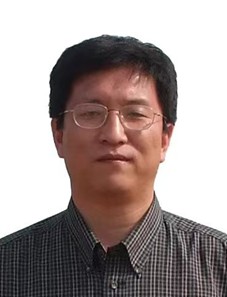
Weiyong Yu
Professor of the School of Chemistry and Chemical Engineering, Shandong University, China; Recipient of National Science Fund for Distinguished Young Scholars, Most Cited Researchers from Elsevier, World' s top 2% scientists
Biography: Weiyong Yu is a professor and doctoral supervisor at the School of Chemistry and Chemical Engineering, Shandong University. He is a Recipient of the National Science Fund for Distinguished Young Scholars. He has been awarded the Second Prize of the National Natural Science Award, the First Prize of the Natural Science Award of the Chinese Academy of Sciences, the First Prize of the Natural Science and Technology Award of Jilin Province, the First Prize of the Natural Science Academic Achievement Award of Jilin Province, and the First Prize of the Outstanding Scientific Research Achievement Award of Shandong Provincial Universities. He is a Clarivate Highly Cited Researcher and a Stanford-Elsevier Top 2% Scientist Worldwide. He has published 408 papers with an h-index of 84, and holds 36 authorized patents in China, the United States, the United Kingdom, and Germany. He has authored the Chinese monograph Colloidal Semiconductor Quantum Dots and three English experimental textbooks. His research focuses on the preparation of functional polymers and optoelectronic nanomaterials and their applications in energy, electronics, biomedicine, environment, and catalysis, including solar cells, LED color display and white lighting, wearable health monitoring and sensing, electrochromic smart windows and photothermal control, and water purification (photocatalysis, nano-adsorption).

Baohua Jia
Distinguished Professor at RMIT University, Australia and inaugural Director of the Centre for Atomaterials and Nanomanufacturing (ACAN);Fellow of ATSE, Fellow of Optica, and Fellow of IoM3
Biography: Baohua Jia is a Distinguished Professor at RMIT University, Australia, ARC Future Fellow, and inaugural Director of the Centre for Atomaterials and Nanomanufacturing (ACAN). She is also Node Director of the ARC Centre of Excellence in Optical Microcombs for Breakthrough Science (COMBS). Previously she was Full Professor, Founding Director of the Centre for Translational Atomaterials, and Research Leader at Swinburne University of Technology. She received her BSc and MSc from Nankai University and PhD from Swinburne University of Technology. She is an elected Fellow of ATSE, Fellow of Optica, and Fellow of IoM3, and has served on the ARC College of Experts since 2019. Her research focuses on light–nanomaterial interactions and laser manipulation of 2D/atomic-scale materials for clean energy, purification, imaging, ultrafast nanofabrication, all-optical communications and intelligent manufacturing. She has secured over A$90 million in funding as key CI, holds 15 patents with over A$20 million industry return, and has commercialised nanoprinting and graphene technologies. She has co-authored 350+ publications with an H-index of 83 and 25,500+ citations, and delivered 90+ invited/keynote/plenary talks.
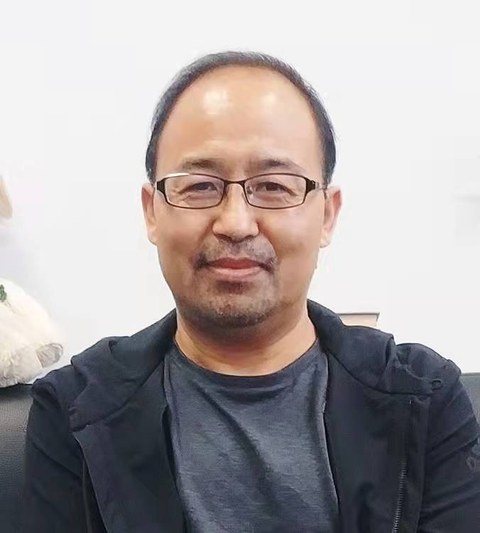
Shijie Xu
Distinguished Professor, Department of Optical Science and Engineering, Fudan University; National Second-Class Professor; Recipient of the 2010 National Natural Science Foundation of China (NSFC) Outstanding Young Scholar Award (Overseas, Hong Kong and Macao)
Biography: Shijie Xu is a Distinguished Professor in the Department of Optical Science and Engineering at Fudan University, a National Second-Class Professor, and a Shanghai Distinguished Expert. He received his B.Eng. from Hebei Institute of Technology in 1984, and his M.Eng. and Ph.D. from Xi'an Jiaotong University in 1989 and 1993, respectively. He previously served as a tenured Professor in the Department of Physics at The University of Hong Kong, and joined Fudan University in 2020. His research focuses on wide-bandgap semiconductor optics, localized electronic states and ensemble fluorescence, low-dimensional semiconductor and single-quantum-structure luminescence, diamond single-photon sources, and quantum optics. He proposed a new distribution function for localized electronic states and an ensemble fluorescence model, and experimentally demonstrated fluorescence self-absorption and photon self-circulation in solids. His work has been cited by several authoritative textbooks. He has received the Second Prize of the Ministry of Education Natural Science Award and the title of Shanghai Distinguished Expert.

Mengxin Ren
Professor and Doctoral Supervisor, Nankai University; Recipient of the National Science Fund for Excellent Young Scholars
Biography: Mengxin Ren is a professor at the School of Physics, Nankai University. His research focuses on nonlinear optics, nanophotonics, and quantum optics. He has published over 70 papers in journals such as Physical Review Letters, Nature Communications, Optica, and Light: Science & Applications. He holds 17 invention patents (11 CN, 4 US) and has led 13 national and provincial research projects, securing over 20 million CNY in funding. He also serves as a reviewer for journals from Nature, Wiley, OSA, APS, and AIP.
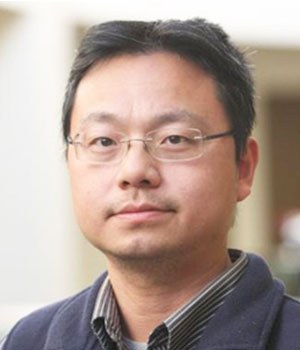
Alex Yasha Yi
Fellow of NAI (National Academy of Inventors) & Optica (Optical Society of America), a Full Professor of Electrical Engineering and Director of Research at Connected System Institute, University of Wisconsin, Milwaukee
Biography: Dr. Yi is currently Fellow of NAI (National Academy of Inventors) & Optica (Optical Society of America), a Full Professor of Electrical Engineering and Director of Research at Connected System Institute, University of Wisconsin, Milwaukee. He received the Ph.D. degree from the Massachusetts Institute of Technology (MIT), Cambridge, MA, USA, and was a Post-Doctoral Associate with the MicroPhotonics Center, Massachusetts Institute of Technology, Cambridge, MA, USA, where he was involved in research on integrated nano optoelectronic devices and systems. He had extensive research experiences with the Los Alamos National Laboratory, and the 3M Corporate Research Laboratory. He is also a Professor Affiliate with the Microsystems Technology Laboratory at MIT. He has authored more than hundreds of top journal papers, edited four book/book chapters, and holds 34 issued patents (18 U.S. patents and 16 international patent). He has led several government/industry-funded projects, has been at review panel for NSF, DOE and DOD, and has been a reviewer for leading journals. His research interests are Integrated/Intelligent chips, Renewable energy, Smart micro sensors; Virtual Reality/Augmented Reality, Solid state on-chip Lidar for autonomous driving/UAVs/Robotics; Telecommunications; and Solid state lighting.
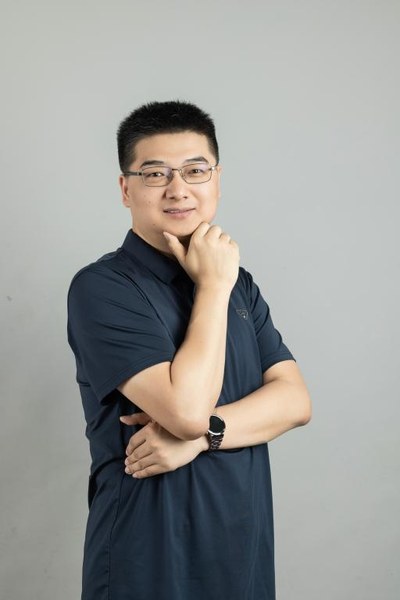
Fei Liu
Professor, School of Optoelectronic Engineering, Xidian University; Doctoral Supervisor; Huashan Distinguished Professor; National High-Level Young Talent
Biography: Fei Liu, Ph.D., is a Professor and doctoral supervisor at the School of Optoelectronic Engineering, Xidian University, Huashan Distinguished Professor, National High-Level Young Talent, recipient of the Shaanxi Provincial Distinguished Young Scholar Fund, and has been listed on the "World's Top 2% Scientists" ranking. He received his Ph.D. in Optical Engineering from Xidian University in 2016 and has been teaching there since then. He has visited the Georgia Institute of Technology and the University of Arizona in the United States. In 2021, he was exceptionally promoted to full Professor. He currently serves as Director of the Institute of Computational Imaging at Xidian University, Deputy Director of the Xi'an Key Laboratory of Computational Imaging, and Guest Researcher at the State Key Laboratory of Applied Optics, Changchun Institute of Optics, Fine Mechanics and Physics, Chinese Academy of Sciences. His research focuses on computational imaging and image processing. He has led projects including the NSFC Young Scientists Fund, NSFC General Program, and the Shaanxi Provincial Distinguished Young Scholar Fund. He has published over 60 papers in journals such as Nature Communications, Light: Science & Applications, Photonics Research, and Optics Letters, and holds more than 20 authorized national invention patents. He has received the First Prize of the Technology Invention Award from the Chinese Society for Optical Engineering and the Second Prize of the Henan Provincial Science and Technology Progress Award. He currently serves as Associate Editor of Advanced Imaging and Journal of Nanophotonics, Editor of Scientific Reports, Editorial Board Member of Optics and Lasers in Engineering, and Young Editorial Board Member of PhotoniX, Acta Photonica Sinica, and Infrared and Laser Engineering.
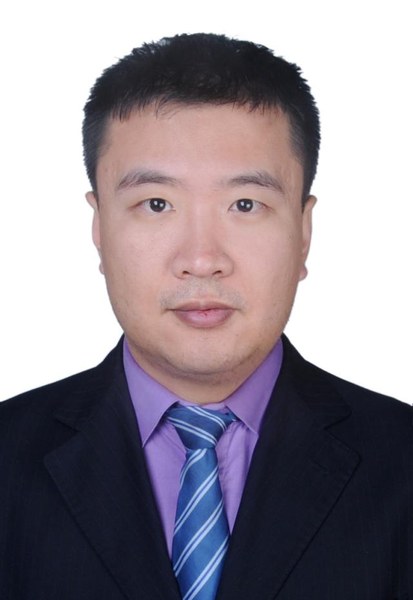
Weigang Hou
Professor (Level 3) and Doctoral Supervisor, Chongqing University of Posts and Telecommunications; Recipient of the National Science Fund for Excellent Young Scholars; Deputy Director of the Institute of Intelligent Communication and Network Security; Wenfeng Guomai Scholar (Level III); Joint-Appointment Professor of the State Key Laboratory of Information Photonics and Optical Communications
Biography: Weigang Hou is a Professor (Level 3) and doctoral supervisor at Chongqing University of Posts and Telecommunications. He is a recipient of the National Science Fund for Excellent Young Scholars and the Liaoning Provincial Distinguished Young Scholar Fund, Deputy Director of the Institute of Intelligent Communication and Network Security, Wenfeng Guomai Scholar (Level III), member of the University Academic Committee, leader of the "Climbing Pioneer" Outstanding Demonstration Research Team, core member of the National Innovation Group, Chongqing Academic and Technical Leader, and one of the first batch of Young Top-Notch Talents under the Chongqing Talent Program. He also holds a joint appointment as Professor of the State Key Laboratory of Information Photonics and Optical Communications. He received his Ph.D. jointly from Northeastern University and City University of Hong Kong, and was a senior visiting scholar at Eindhoven University of Technology, the Netherlands, as well as a trainee scholar at the Jeppix tape-out laboratory. His research focuses on integrated sensing, communication, and computing optical networks, multi-dimensional optical on-chip information exchange and analog computing, and optoelectronic integration and micro-network reliability. He conducts full-chain research from scheme design, simulation and verification, layout and tape-out, to coupling and testing, and collaborates with CUMEC and Biren Technology to advance domestic secure intelligent chips and FPGA prototypes. He has published over 100 papers in journals such as Laser & Photonics Reviews, IEEE JLT/JOCN, Optics Express, Acta Optica Sinica, and Infrared and Laser Engineering, including 8 ESI highly cited papers and one IEEE ISJ Best Paper of the Year. He has received the Ministry of Education Natural Science Award, Chongqing Natural Science Award, and the China Institute of Communications Science and Technology Progress Award. He is a senior member of the China Institute of Communications and the Chinese Institute of Electronics, Guest Editor of Photonics, Young Editorial Board Member of Digital Communications and Networks, and has served as (co-)chair of multiple domestic and international conferences.
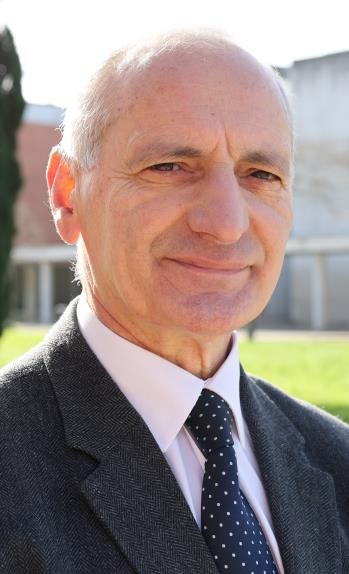
Mário F. S. Ferreira
Professor at the Department of Physics, University of Aveiro, Portugal, and a Fellow of both OPTICA (formerly OSA) and SPIE
Biography: Mário F. S. Ferreira is a Professor at the Physics Department of the University of Aveiro, Portugal, former leader of the Optics and Optoelectronics Group of I3N – Institute of Nanostructures, Nanomodelling and Nanofabrication. Between 1990 and 1991 he was at the University of Essex, UK, working on external cavity semiconductor lasers and nonlinear optical fiber amplifiers. His research interests include modelling and characterization of multi-section semiconductor lasers for coherent systems, quantum well lasers, optical fiber amplifiers and lasers, optical sensors, soliton propagation, and polarization and nonlinear effects in optical fibers. He has about 400 scientific journal and conference publications and authored/edited books such as Nonlinear Effects in Optical Fibers, Solitons in Optical Fiber Systems, Dissipative Optical Solitons, Photonic Crystal Fibers – Recent Advances, Specialty Optical Fibers, and Optical Fiber Lasers – Recent Advances and Applications. He served as Guest Editor for special issues of Fiber and Integrated Optics, Optics Express/Applied Optics, Journal of Nonlinear Mathematical Physics, and Fibers. He is a Fellow and Travelling Lecturer of both OPTICA and SPIE, a Member of IEEE, and currently serves as Associate Editor or Advisory Board Member of several international optics and photonics journals.
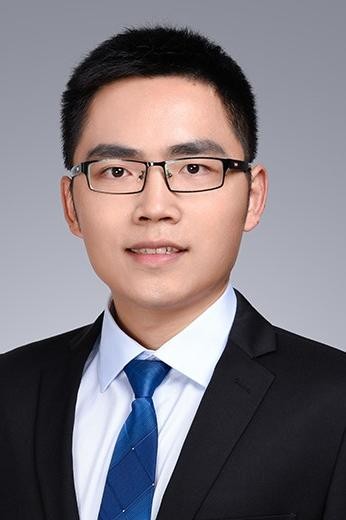
Qinghua Song
Associate Professor and Doctoral Supervisor, Tsinghua Shenzhen International Graduate School, Tsinghua University; Recipient of the National Overseas High-level Young Talents Award
Biography: Dr. Qinghua Song is an Associate Professor and Doctoral Supervisor at Tsinghua Shenzhen International Graduate School, Tsinghua University. He has been recognized with the National Overseas High-level Young Talents Award, and has been honored as a core member of the Innovation and Entrepreneurship Team introduced under the Guangdong "Pearl River Talent Plan", a Distinguished Talent (Category B) under the Shenzhen "Pengcheng Peacock Plan", one of China's Top Ten Advances in Metamaterials, and a recipient of the National Outstanding Young Scientist Award in Metamaterials. His research focuses on micro/nano optics, metasurfaces, photonic crystals, and topological optics. To date, he has published over 80 papers, including more than 50 as first/corresponding author in prestigious international journals such as Nature, Science, Nature Reviews Materials, Physical Review Letters (4), Science Advances (3), Nature Communications (7), Light: Science & Applications (6), eLight, and Advanced Materials. He has led three projects funded by the National Natural Science Foundation of China, as well as sub-projects under the National Key Research and Development Program, key projects of the Jiangsu Provincial Department of Science and Technology, and major technical research projects of the Shenzhen Science and Technology Innovation Commission.
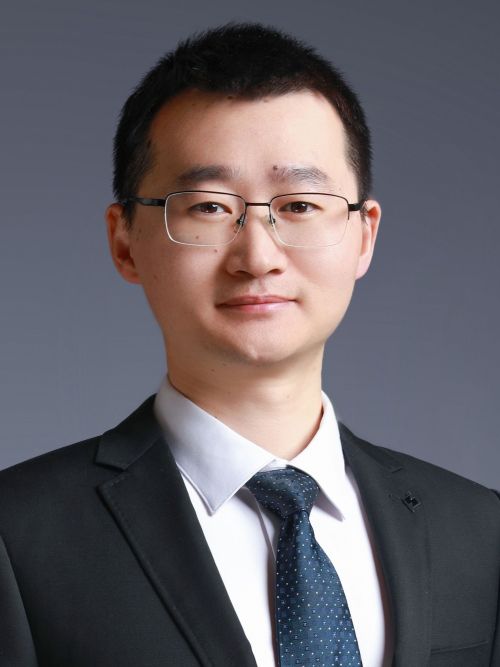
Yuzhi Shi
Professor, Tongji University; National High-level Young Talents Awardee
Biography: Dr. Yuzhi Shi is a Professor at Tongji University. He has been selected for the National High-level Young Talents Program and the Shanghai Leading Talents (Overseas) Young Program. His research focuses on the fundamental theory and biomedical applications of optofluidic optical tweezers and manipulation chips. He has led projects including the National Key Research and Development Program (Ministry of Science and Technology), the Young Scientists Fund and General Program of the National Natural Science Foundation of China, as well as Shanghai Municipal General and Basic Research Special Zone projects. He has published over 100 papers in renowned journals such as Science Advances (×5), Physical Review Letters (×5), Light: Science & Applications / eLight (×10), Nature Communications (×6), and Advances in Optics and Photonics (×2). He received the Micromachines 2023 Young Scientist Award and the inaugural "Qingyun Award" of the Chinese Laser Press in 2025.

Ljiljana Trajkovic
Professor at the School of Engineering Science, Simon Fraser University, Distinguished Lecturer of the IEEE Systems, Man, and Cybernetics Society, and Fellow of the IEEE
Biography: Ljiljana Trajkovic received the Dipl. Ing. degree from University of Pristina, Yugoslavia, the M.Sc. degrees in electrical engineering and computer engineering from Syracuse University, Syracuse, NY, and the Ph.D. degree in electrical engineering from University of California at Los Angeles. She is currently a professor in the School of Engineering Science, Simon Fraser University, Burnaby, British Columbia, Canada. Her research interests include communication networks and dynamical systems. Dr. Trajkovic served as IEEE Division X Delegate/Director, President of the IEEE Systems, Man, and Cybernetics Society, and President of the IEEE Circuits and Systems Society. She serves as Editor-in-Chief of the IEEE Transactions on Human-Machine Systems. She is a Distinguished Lecturer of the IEEE Systems, Man, and Cybernetics Society and was a Distinguished Lecturer of the IEEE Circuits and System Society. She is a Fellow of the IEEE.
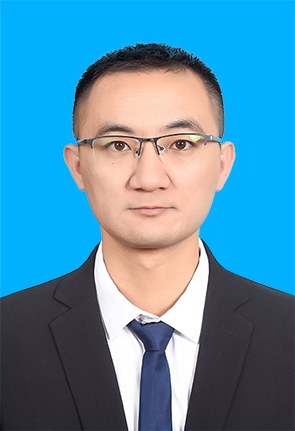
Chengbing Qin
Professor and Doctoral Supervisor, State Key Laboratory of Quantum Optics and Quantum Optics Devices, and Institute of Laser Spectroscopy, Shanxi University; National-Level Young Talent
Biography: Chengbing Qin is a Professor and doctoral supervisor at the State Key Laboratory of Quantum Optics and Quantum Optics Devices, and the Institute of Laser Spectroscopy, Shanxi University, and a National-Level Young Talent. He has received the Second Prize of the Shanxi Provincial Natural Science Award and the First Prize of the Shanxi Provincial Technology Invention Award, and has been selected for the Shanxi Province "Sanjin Talents" program and as a University Young Academic Leader. His research focuses on single-molecule quantum coherence, non-classical light sources, and quantum-correlated imaging. He has innovatively developed quantum-coherence-modulation-enhanced single-molecule microscopy imaging techniques, addressing key challenges in ultrafast quantum dynamics measurement. He has led multiple national and provincial projects, including the Major Research Plan of the National Natural Science Foundation of China and a sub-project of the National Defense 173 Key Program. Over the past five years, he has published more than 30 papers as first/corresponding author in top journals such as Nature, Nature Communications, Light: Science & Applications, and Physical Review Letters.
Shixiang Xu
Professor and Doctoral Supervisor, Shenzhen University
Biography: Professor Shixiang Xu is a professor and doctoral supervisor at Shenzhen University. He is a member of the Laser Professional Committee and the High-Speed Photography Professional Committee of the Chinese Optical Society, and has served as a council member of the Guangdong Optical Society and a member of the Higher Education Committee of the Shenzhen Municipal Committee of the China Democratic League. He is a recipient of the Shanghai Pujiang Talent Program, an Outstanding Scholar of Shenzhen University, an expert reviewer for the National Key Research and Development Program of the Ministry of Science and Technology, and a review expert for science and technology projects of Guangdong Province and Shenzhen Municipality. He has led more than 20 projects, including the National Key Research and Development Program of the Ministry of Science and Technology, key and general projects of the National Natural Science Foundation of China, and key provincial and municipal projects. He has published over 180 papers in internationally renowned journals such as Nature Communications, Advanced Optical Materials, Advanced Photonics, and Laser & Photonics Reviews, and holds more than 30 authorized invention patents. He received the First Prize of the Shanghai Technological Invention Award in 2022. He serves as a reviewer for journals including Nature, Nature Communications, Advanced Photonics, Light: Science & Applications, and Optica. His research interests include ultrashort pulse laser technology, ultrafast optical imaging, terahertz imaging and detection, and vector optical field manipulation. His research emphasizes industrialization, and he has extensive connections in the industry.

Vinayak Adimule
Professsor and Dean Research in Angadi Institute of Technology and Management, Belagavi, Karnataka, India
Biography: Fifteen years of research experience as senior Scientist, associate research scientist in R&D organizations of TATA (Advinus Therapeutics Ltd) , Astra Zeneca India, Trans Chem Ltd. Expert in the area of Medicinal Chemistry, Material Chemistry, Material electronics, Photocatalysis, Polymer nanocomposites, Nanoelectronics, Actuators and Sensors. Overseas Research Fellow of Nanyang Global Research Center, Bangkok, Malaysia. Published more than 150 research articles, and 15 Books/several book chapters in Scopus, Q-ratted journals with high impact factor, attended and presented papers in National and International Conferences as Key note speaker, distinguished speaker. Published books in Wiley, Trans-Tech etc., Chaired/ Key note speaker/Organizing secretory, Editor for International and National conferences, Editorial Board Member, Life Member of many international societies/research institutions. Editor of the special issues published in springer, Elsevier and Wiley. Recognized Research Guide Visvesvarayya Technological University, Belagavi, Karnataka, India. Presently working as Professsor and Dean Research in Angadi Institute of Technology and Management, Belagavi, Karnataka, India. Scientific Advisor for various government and research organizations, Industries and R&D organizations. Supervising 4 research scholars for Ph.D. Research interest includes Nano Electronics, Liquid Crystals, Liquid crystal Nanostructures, Optoelectronics, Material Chemistry, Sensors and Actuators, Bio Nanomaterials, Medicinal Chemistry.
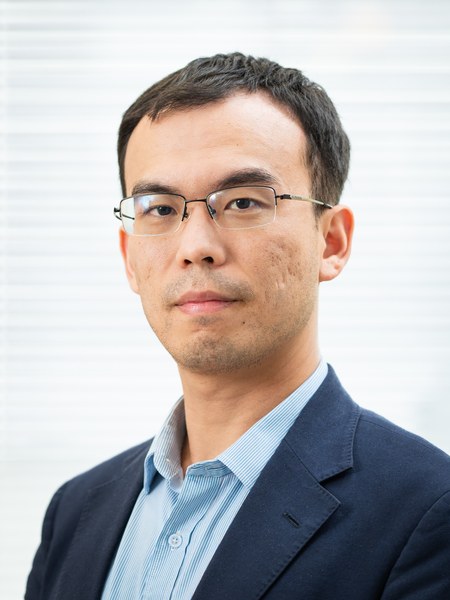
Yijie Shen
Nanyang Technological University, Singapore
Biography: Yijie Shen is Nanyang Assistant Professor in Nanyang Technological University, Singapore, since 2023. He was previously a Marie Curie Senior Research Fellow in University of Southampton, UK, from 2019-2023. He received his Ph.D. degree in Tsinghua University, China, in 2019. He received his B.S. degree in South China University of Technology, Guangzhou, China, in 2015. He is a member of the Optical Society of America (Optica) and Chinese Optical Society (COS). He is an invited Affiliate Member of The International Institute for Sustainability with Knotted Chiral Meta Matter (SKCM2). He won the 2025 Rising Stars of Light (LSA, Nature), iSPN 2025 Young Researcher Award (Singapore), Rising Stars in Optics 2024 (IOP), Wang Da-Heng Optics Award 2019 (COS), etc. His research interests include structured light, nanophotonics, metamaterials, topological photonics, and skyrmions.